





Cartridges

The cartridge is the only part of a record player that touches the record. A stylus rides the groove, a suspension lets it move, and a magnet and a coil turn that movement into a voltage of a few thousandths of a volt or less. Everything downstream is amplification of what happened in that half millimetre.
Because it is mechanical and because it wears, it is also the part of a record player that changes most over time and gets looked at least. A stylus has a service life quoted in hundreds of hours rather than in years, and a worn one does not simply sound duller. It sits wrong in the groove and takes vinyl with it. That is the one fact here that costs real money when it is ignored, because the damage lands on the records rather than on the part.


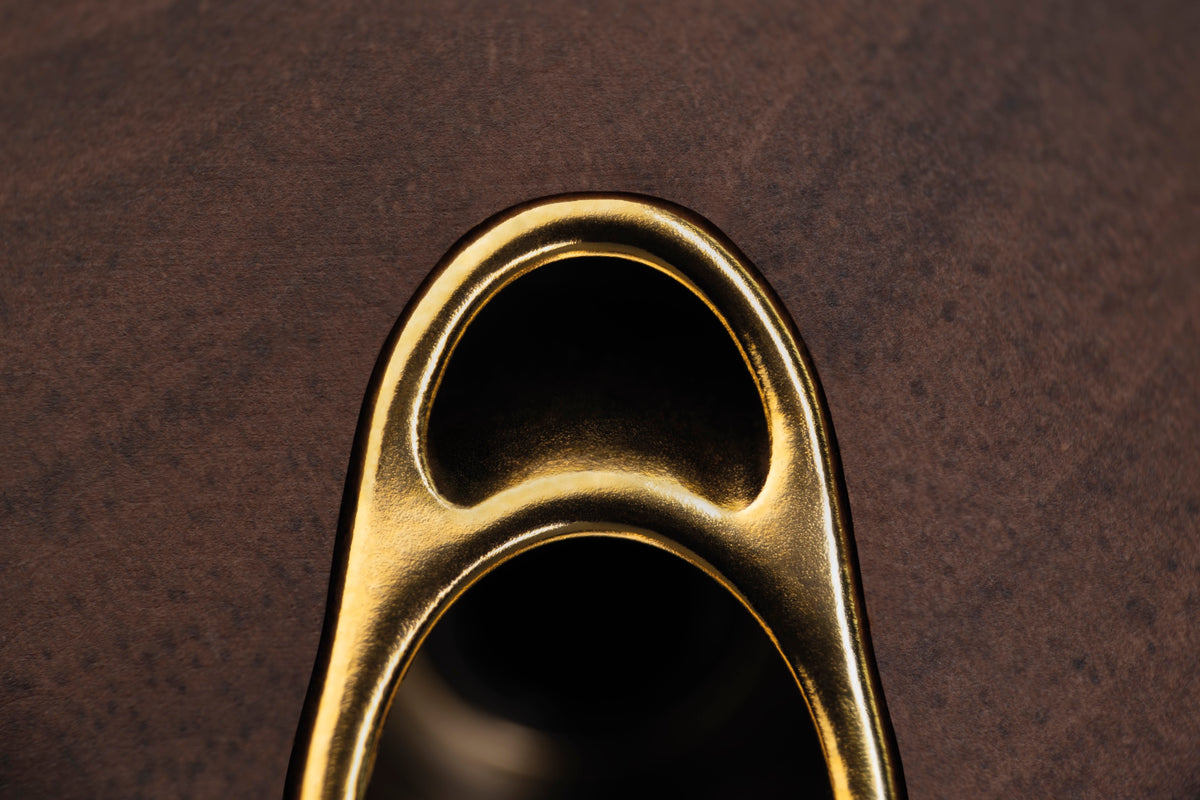
The Aeon4 with gold-plated copper coil wire: the same nude Shibata on sapphire, in Brazilian ebony, at 1.0 mV only.
Which one

The first fork is moving magnet or moving coil, with moving iron, which is how Grado builds its cartridges, sitting between them. A moving magnet cartridge puts the magnet on the end of the cantilever and the coils in the body, puts out a comparatively healthy signal, and almost any phono input will take it. Most of them also let you replace the stylus yourself, which makes the wear item a part rather than a trip. A moving coil reverses the arrangement, puts out a small fraction as much, needs a phono stage built for that level, and generally goes back to the maker when the stylus is done. Neither is better. One is more convenient and one has a lower moving mass, and plenty of people spend a lifetime happily in the first camp. Moving iron keeps the magnet and the coils in the body and moves a small piece of iron between them, so the moving part stays light and a standard phono input reads it like a moving magnet. Grado's wooden Timbre models also come in a 1.0 mV low output version, which wants a moving coil setting rather than the standard input.
Which one
The first fork is moving magnet or moving coil, with moving iron, which is how Grado builds its cartridges, sitting between them. A moving magnet cartridge puts the magnet on the end of the cantilever and the coils in the body, puts out a comparatively healthy signal, and almost any phono input will take it. Most of them also let you replace the stylus yourself, which makes the wear item a part rather than a trip. A moving coil reverses the arrangement, puts out a small fraction as much, needs a phono stage built for that level, and generally goes back to the maker when the stylus is done. Neither is better. One is more convenient and one has a lower moving mass, and plenty of people spend a lifetime happily in the first camp. Moving iron keeps the magnet and the coils in the body and moves a small piece of iron between them, so the moving part stays light and a standard phono input reads it like a moving magnet. Grado's wooden Timbre models also come in a 1.0 mV low output version, which wants a moving coil setting rather than the standard input.
Stylus shape, and matching the arm
The second fork is the stylus shape, and it does more than the price does. A conical tip is cheap, forgiving of an arm that is slightly out, and touches a small part of the groove wall. Elliptical contacts more of it and retrieves more of what is there. Line contact and shibata shapes go further again and demand that the alignment and the tracking force are right, because they are less forgiving when they are not. A fine stylus on an arm you cannot set up properly is a way to get worse sound for more money.
The third is the one people skip, and it decides whether any of the rest works. A cartridge and a tonearm form a mechanical system with a resonant frequency, set by the cartridge's compliance and the effective mass of the arm. Land it in roughly the 8 to 12 Hz window and the pairing behaves. Get it wrong and the arm and the cartridge fight each other at a frequency that sits inside the record's own warps, and it will mistrack no matter how good either part is. Tell us the deck and the arm and we will tell you what suits them.
Worth knowing

Setup is worth more than the next price tier. Tracking force inside the maker's window, the right overhang, the cartridge square in the headshell and anti-skate set sensibly will take a modest cartridge past an expensive one that was fitted by eye. It is an hour with a protractor and a gauge, and both together cost less than the smallest upgrade you are considering.
Loading is the specification that quietly ruins moving magnet sound. A moving magnet cartridge expects to see a particular capacitance across its output, typically a couple of hundred picofarads including the tonearm cable, and too much of it tips the top end. People chase a bright or a dull treble through three cartridges when the phono stage's loading was the variable the whole time.
Worth knowing
Setup is worth more than the next price tier. Tracking force inside the maker's window, the right overhang, the cartridge square in the headshell and anti-skate set sensibly will take a modest cartridge past an expensive one that was fitted by eye. It is an hour with a protractor and a gauge, and both together cost less than the smallest upgrade you are considering.
Loading is the specification that quietly ruins moving magnet sound. A moving magnet cartridge expects to see a particular capacitance across its output, typically a couple of hundred picofarads including the tonearm cable, and too much of it tips the top end. People chase a bright or a dull treble through three cartridges when the phono stage's loading was the variable the whole time.
Tracking and stylus wear
Tracking ability matters more than frequency response in the passages that are hard to play. Loud, high, sibilant material near the centre of a side is where a cartridge either stays in the groove or does not, and the ones that do are not reliably the expensive ones.
A worn stylus does not announce itself. It goes gradually duller and harsher in a way you adapt to day by day, and the first unmistakable sign is often damage you can hear on a record you love. Count hours rather than years, look at the tip under magnification if you can, and replace it before you are certain.
One cheerful note to end on. A stylus is often the cheapest single thing that changes a record player audibly, which makes this the best value upgrade in vinyl and the one most often left until last.
Worth reading
All guides
A cartridge is chosen by what it has to work with, the arm above it and the phono stage after it, and only then by how it sounds. Gain, loading, compliance, named picks with their faults, and what ...

Two pressings of one album can sound nothing alike, and almost none of the difference is the thing collectors argue about. What the mastering decides, what the plant decides, what 180 gram and half...

The component most people discover by hearing nothing at all, or something thin and distant. What it does, whether you already have one, and when to buy better.

Reviewed September 2026. You want to play records. You don't want to become a hobbyist who spends more time optimizing a turntable than listening to music. Here's what to get. What a turntable set...
We take cartridges on consignment and in trade. Tell us what you have.
What you get either way
The listening room
Third floor at 215 East Lewis Street in Livingston, by appointment. An hour in the room settles this faster than anything either of us could write.
How we grade
Used and consigned gear is graded at the worst axis and never averaged. Every defect is named on the listing and the standard is published, so as described is something you can hold us to.


