








Grace Design

Grace Design builds in Colorado, and has built the same kind of thing the same way for about thirty years: microphone preamplifiers, converters, monitor controllers and one headphone amplifier that people who own one tend not to replace.
Most of what is here is for recording and mixing rather than listening. A preamp, a direct box and a monitor controller are studio tools, and if you have come looking for headphones this is not the page you want.
The person who runs this shop was employee number one at Grace Design in 1997, running production, and brought several of these designs from prototype to something buildable at volume. Discount anything enthusiastic below accordingly.


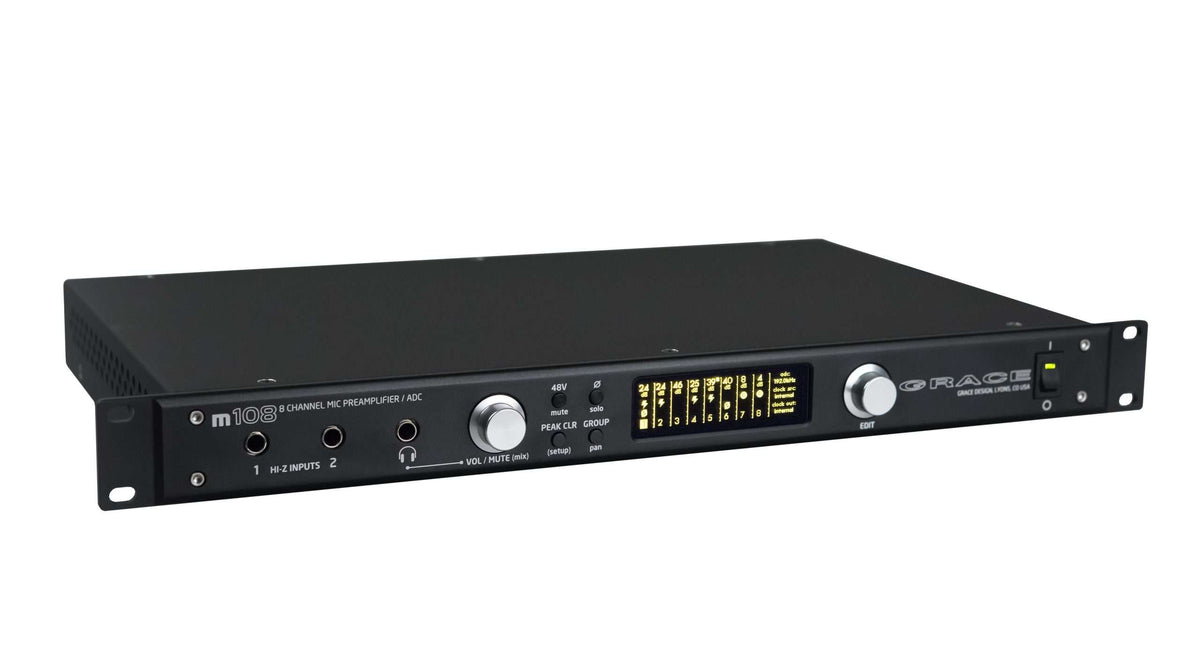






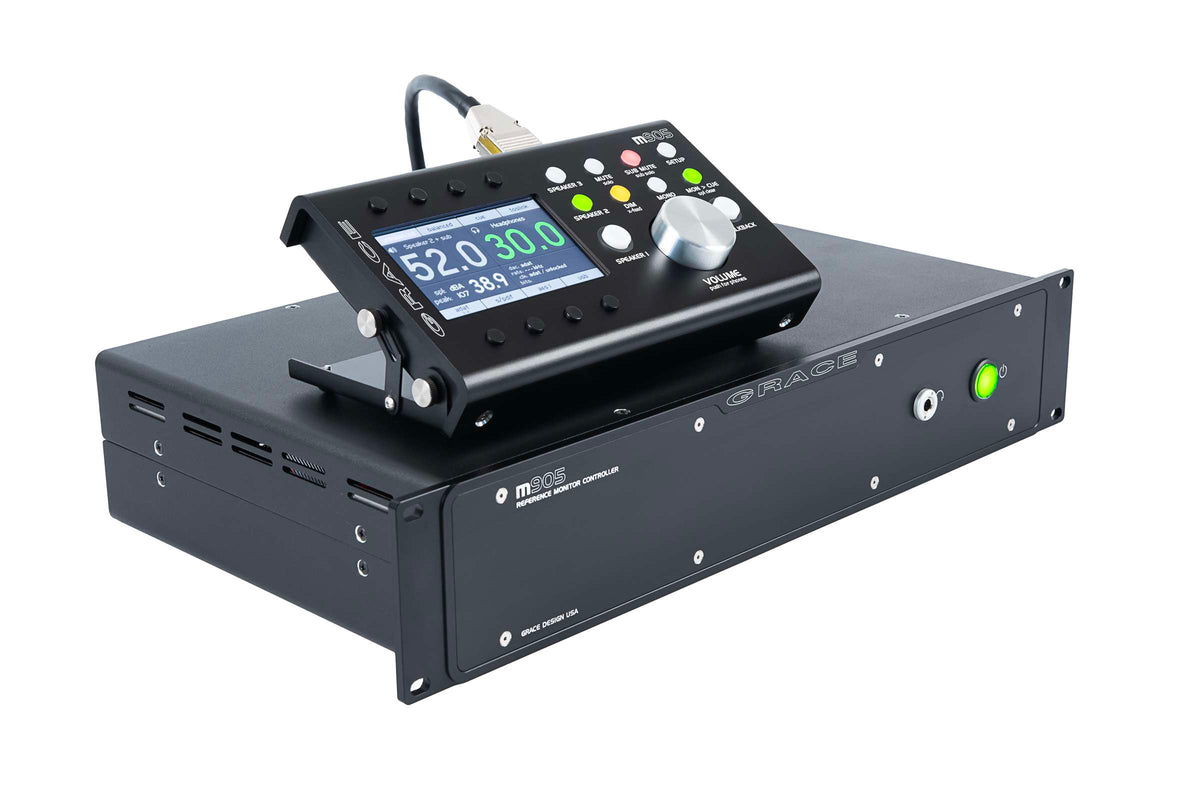


A monitor controller for stereo, surround and immersive rooms, running speaker systems up to 24 channels with room correction EQ and bass management on every channel, from a desk remote. On its own it takes digital sources: AES on DB25 and XLR, ADAT, S/PDIF and USB. Each ADC card adds eight analog inputs on DB25, and on the first card channels one and two can be switched to a stereo pair on XLR or RCA. The option slot takes one card, and we list Dante and Avid DigiLink. Every card we list can be fitted later, and fitted at the factory each one costs less than bought on its own. Grace also makes a Ravenna card for the slot, so ask us about that one. It also comes with a rackmount remote in place of the desk remote, listed without cards; ask us about adding them.

Microphone preamps
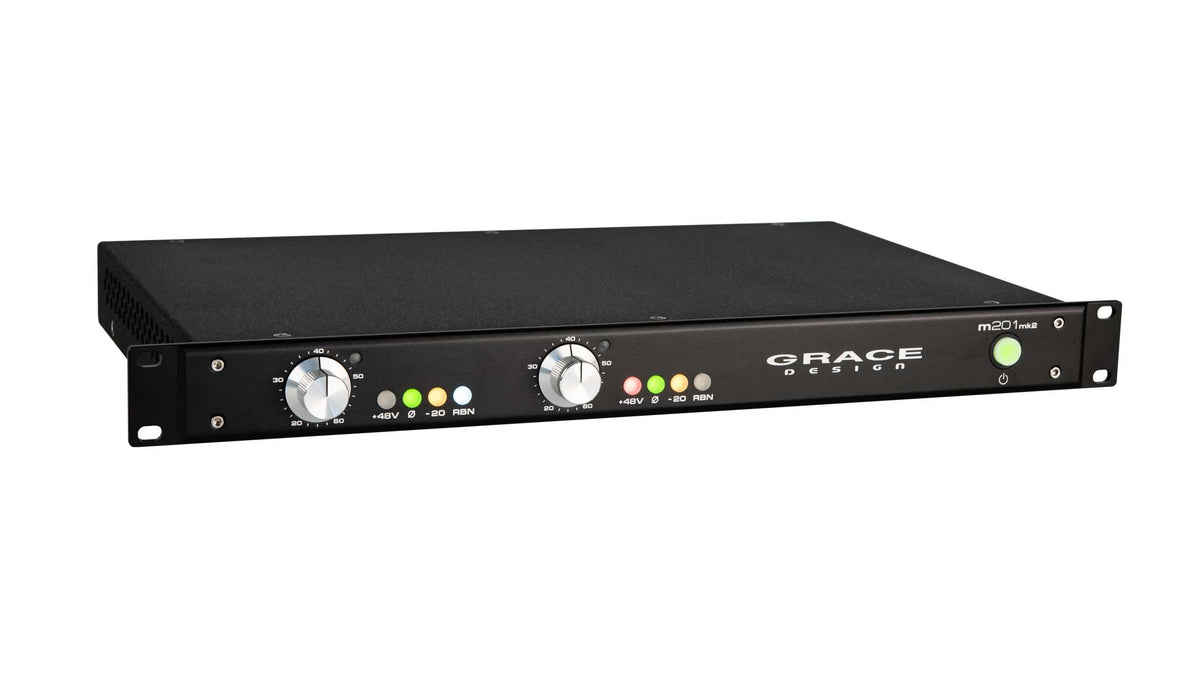
A microphone puts out a signal measured in thousandths of a volt, and the preamp brings it up to the level everything after it expects. It is the first gain in the chain, so noise added here is amplified by everything that follows.
All microphone preampsInstrument preamps
Preamps in pedal form, for acoustic instruments and for microphones on a stage.
All instrument preampsDirect boxes
A direct box takes an instrument or line level signal and hands the desk a balanced, microphone level one it can carry down a long cable. An isolated one also keeps the grounds of the two apart.
All direct boxes
Stereo bars and microphone trees with the spacing and angle marked on them, so a setup goes back where it was.
Which one

With the preamplifiers, the answer depends on how many inputs you need rather than on which sounds better. They are the same circuit topology, so the choice is channel count, form factor and whether you want the converter in the same box.
The monitor controllers are for a room where several sources and several sets of speakers have to be switched cleanly and matched in level, the m905 in stereo and the m908 for immersive formats. If you have one source and one pair of powered monitors, you don't need one.
The direct boxes are all active and isolated, so the choice is channel count: one on the m303, a stereo pair on the m303s, eight on the m308.
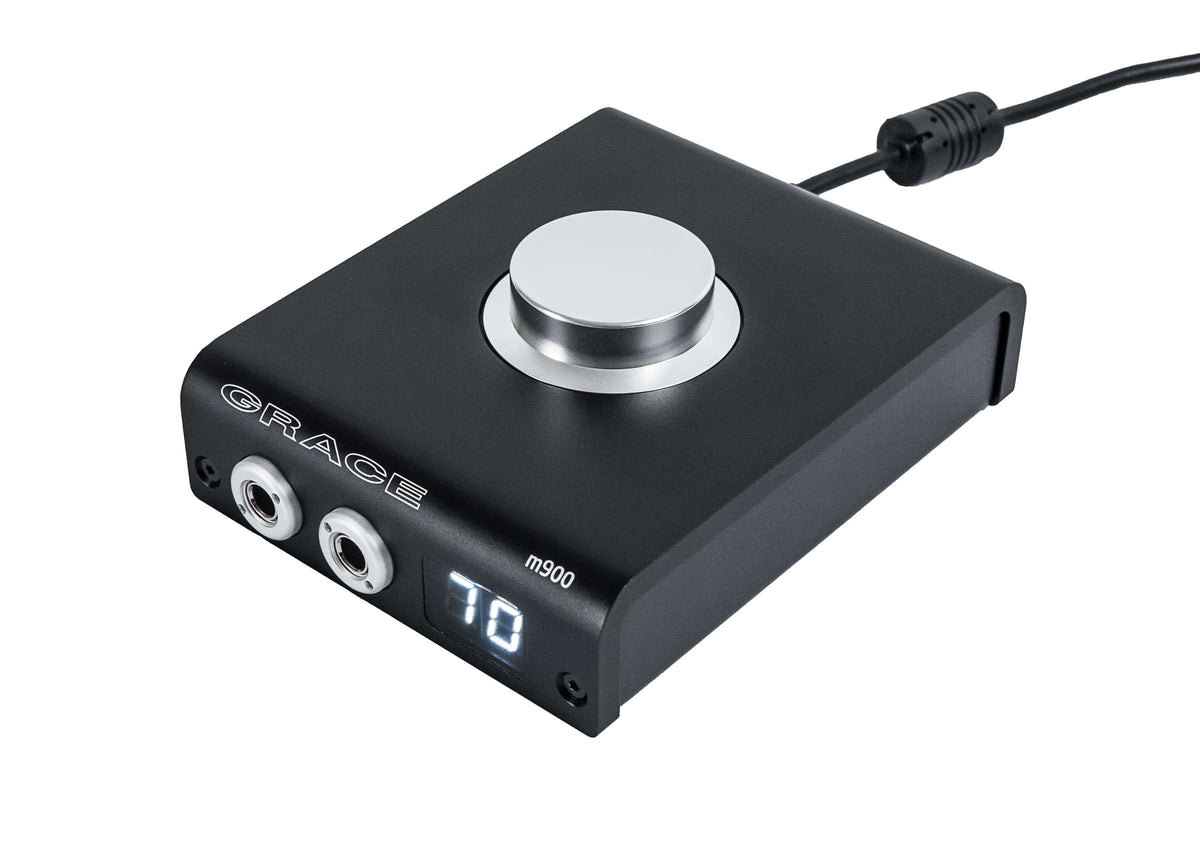
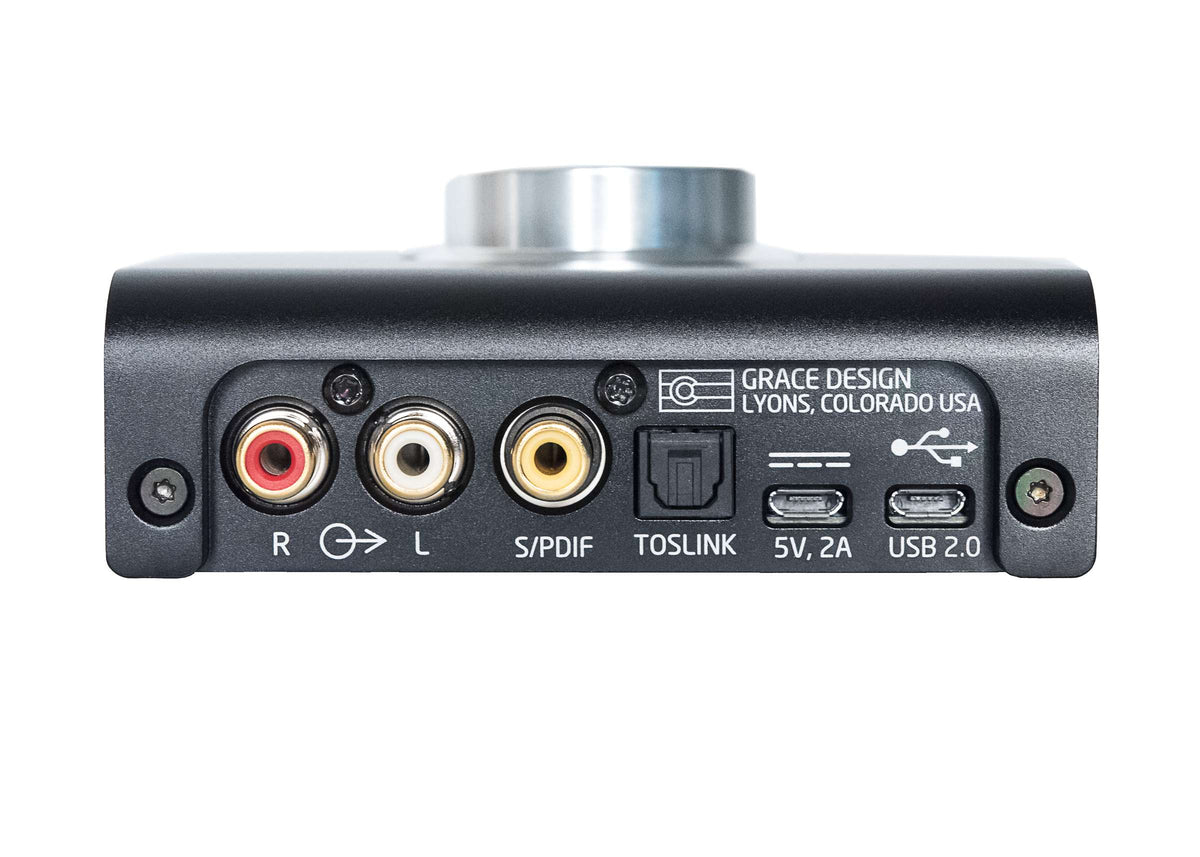
If you came here for headphones after all, the m900 is the exception on this page: a converter, a line preamplifier and a headphone amplifier in one small box, built for listening rather than recording. It has two headphone outputs at 0.08 ohms, and it runs from USB power or from the supply in the box, which takes it from 175 mW to 950 mW into 32 ohms.
Which one
With the preamplifiers, the answer depends on how many inputs you need rather than on which sounds better. They are the same circuit topology, so the choice is channel count, form factor and whether you want the converter in the same box.
The monitor controllers are for a room where several sources and several sets of speakers have to be switched cleanly and matched in level, the m905 in stereo and the m908 for immersive formats. If you have one source and one pair of powered monitors, you don't need one.
The direct boxes are all active and isolated, so the choice is channel count: one on the m303, a stereo pair on the m303s, eight on the m308.
If you came here for headphones after all, the m900 is the exception on this page: a converter, a line preamplifier and a headphone amplifier in one small box, built for listening rather than recording. It has two headphone outputs at 0.08 ohms, and it runs from USB power or from the supply in the box, which takes it from 175 mW to 950 mW into 32 ohms.
What is worth knowing before you spend
These are built to add as little as possible.
They won't flatter a thin source or warm up a harsh one, so somebody looking for character should buy something else.
The m900's headphone outputs sit at 0.08 ohms.
That low an output impedance keeps the frequency response of a low impedance headphone from being bent by the amplifier, which is the mechanism behind a great many complaints about a headphone sounding wrong on one amplifier and right on another.
They're built to be repaired.
Through hole where it matters, made to be opened, and the company answers the phone.
On price: these compete with things that cost more and things that cost less, and the argument for them is never that they are cheap. If a specification chart is how you decide, several cheaper boxes will win on paper.
Worth reading
All guides
What +4 dBu and -10 dBV do to your gain staging, what balanced actually buys, where a ground loop comes from, and how to match the levels of two pairs of speakers.

Most of what gets heard as a preamp upgrade is the first time somebody's levels were right. Where the noise in a recording actually comes from, in order, which of those a purchase can change, and t...

Three ordinary microphones cover more records than one expensive one. What the three are, what each is bad at, the order to buy them in, and what the stand, mount, cable and pop filter add to the b...

The interface decision is a channel count and a driver, not a converter. Boxes named and priced by what you record at once, the ADAT ceiling, and what to check on a used one.
What you get either way
The listening room
Third floor at 215 East Lewis Street in Livingston, by appointment. An hour in the room settles this faster than anything either of us could write.
How we grade
Used and consigned gear is graded at the worst axis and never averaged. Every defect is named on the listing and the standard is published, so as described is something you can hold us to.


