






Microphone Preamps
A microphone puts out a signal measured in thousandths of a volt. Everything else expects something about a thousand times larger. The preamp closes that gap, and because it closes it first, it is the one place in the chain where the decision is permanent. Noise added here gets amplified by everything after it.
That is the argument for caring about preamps, and it is worth separating from the argument people usually have, which is about sound. Two jobs are going on. The first is clean gain: enough of it, quiet, with enough headroom that a transient does not run into the rails. The second is character, which comes from the input stage, the transformers if there are any, and how gracefully the circuit behaves as it approaches its limits.
The first job is solved at a price most people can reach. The second is a choice, not a matter of spending more. A preamp built to get out of the way and a preamp built to put iron and a little harmonic weight on a source are both correct, and a room with one of each has more range than a room with two of the same.
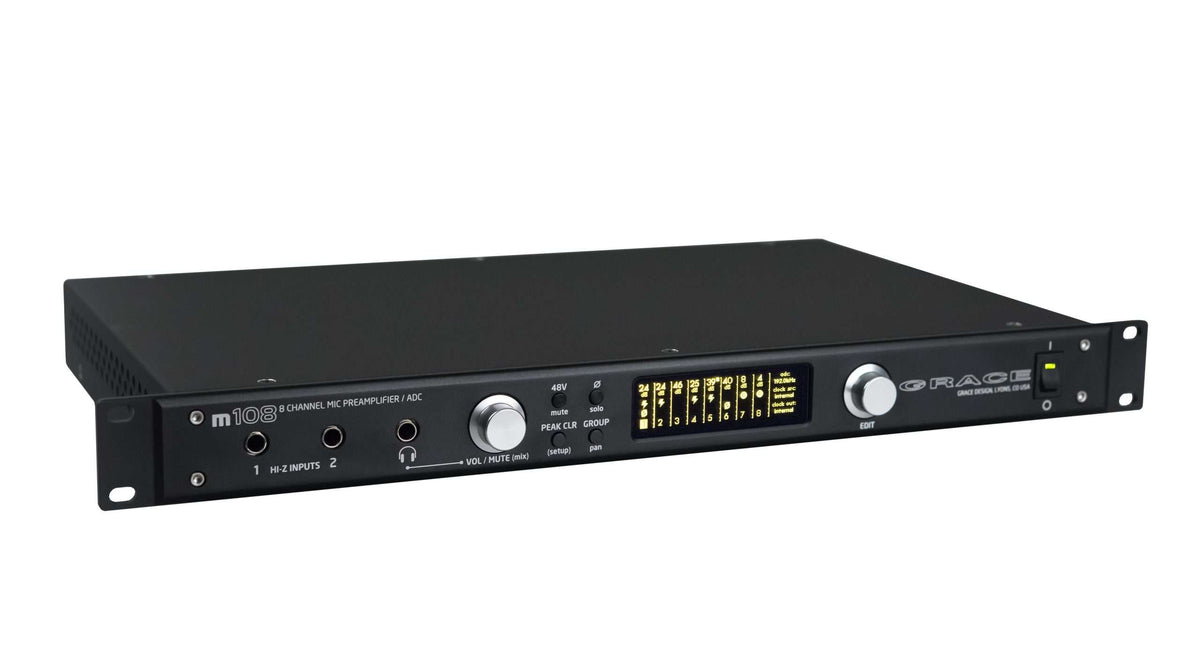


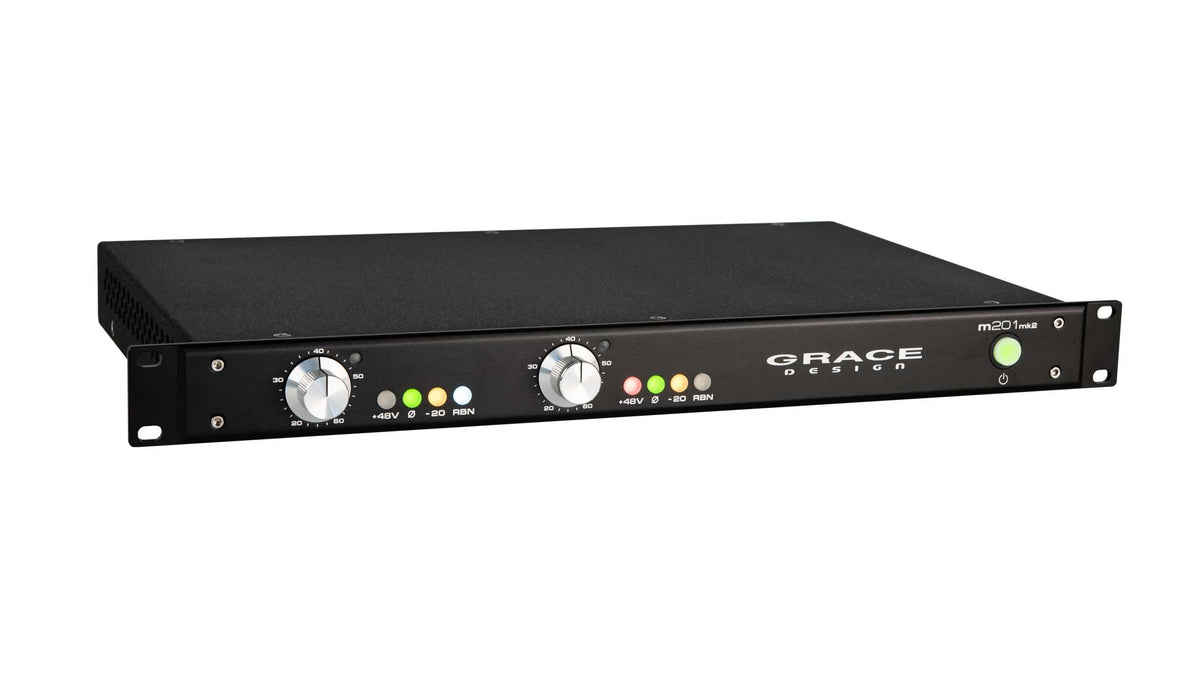


8-channel Microphone Preamp with +48V Phantom Power, Polarity Reverse, a -20dB Pad, and Ribbon Mode
Which one
Count channels honestly first. Two channels of something very good beats eight of something ordinary if you record one source at a time, and the reverse is true the moment a drum kit goes up. That decision sets the budget more than any preference about sound will.
Then look at gain and headroom, which are two different numbers and get mixed up constantly. Gain is how much amplification is on offer, and a ribbon or a passive dynamic on a quiet source can want sixty to seventy decibels of it. Headroom is how much level the preamp passes before it stops being linear. A preamp with plenty of gain and little headroom is fine on a vocal and falls apart in front of a kick drum.
Colour is the word for the rest of it, and it is worth being precise about what it means. It means the preamp is doing something measurable: harmonic distortion that rises with level, a transformer softening the extreme top and bottom and adding a little saturation, a slower slew rate rounding transients. None of that is mysterious and none of it is free, because recorded in, it stays in.
Price, and the common mistake
What the tiers buy. An entry channel gets you quiet, enough gain and nothing to apologise for. The middle buys better transformers, more headroom, and switchable input impedance, which changes how a ribbon or an old dynamic loads and is more audible than most tone controls. The top buys discrete hand built circuits, tighter matching, and a specific voice that people go looking for by name.
The common mistake is chasing colour before checking gain structure. A clean preamp driven properly beats a famous one turned up to compensate for a weak signal every time, and a good deal of what gets heard as a preamp upgrade is the first time somebody's levels were right.
Worth knowing
Recording hot is a habit left over from tape and it costs you now. A modern converter has more dynamic range than the preamp feeding it, so aiming peaks around minus eighteen dBFS leaves twenty decibels of room for a transient you did not predict and costs nothing in noise. The loud part happens later, in the mix.
Input impedance is the specification nobody reads and it changes what you hear. A microphone does not see a fixed load, it sees whatever the preamp presents, and a ribbon or an older dynamic will shift its frequency response noticeably with that number. A preamp with switchable impedance is a tone control that works on the microphone itself rather than on the signal afterwards.
The preamps built into a decent interface are competent. They are quiet, they have enough gain for most condensers, and they are not the thing holding a record back. Good reasons to add an outboard preamp are more gain for a ribbon, more headroom on loud sources, and a character you actually want. Wanting a record to sound better in general is not one of them.
Worth reading
All guides
Most of what gets heard as a preamp upgrade is the first time somebody's levels were right. Where the noise in a recording actually comes from, in order, which of those a purchase can change, and t...

Three ordinary microphones cover more records than one expensive one. What the three are, what each is bad at, the order to buy them in, and what the stand, mount, cable and pop filter add to the b...
We take preamps on consignment and in trade. Tell us what you have.
What you get either way
The listening room
Third floor at 215 East Lewis Street in Livingston, by appointment. An hour in the room settles this faster than anything either of us could write.
How we grade
Used and consigned gear is graded at the worst axis and never averaged. Every defect is named on the listing and the standard is published, so as described is something you can hold us to.


