







Amps & DACs
Two boxes that sit between your music and your headphones, doing unrelated jobs. A converter takes the numbers stored in a file or on a disc and turns them into a voltage. An amplifier takes that voltage and makes it big enough, and stiff enough, to move a driver. Plenty of products do both in one chassis, which is why the category is named for the pair.
Worth understanding early: neither box makes a headphone sound better than it can sound. They remove reasons for it to sound worse. A headphone that is not being given enough current goes soft in the bass and flat in the dynamics, and the usual response is to blame the headphone and buy another one. That is the expensive version of this mistake and it is common.
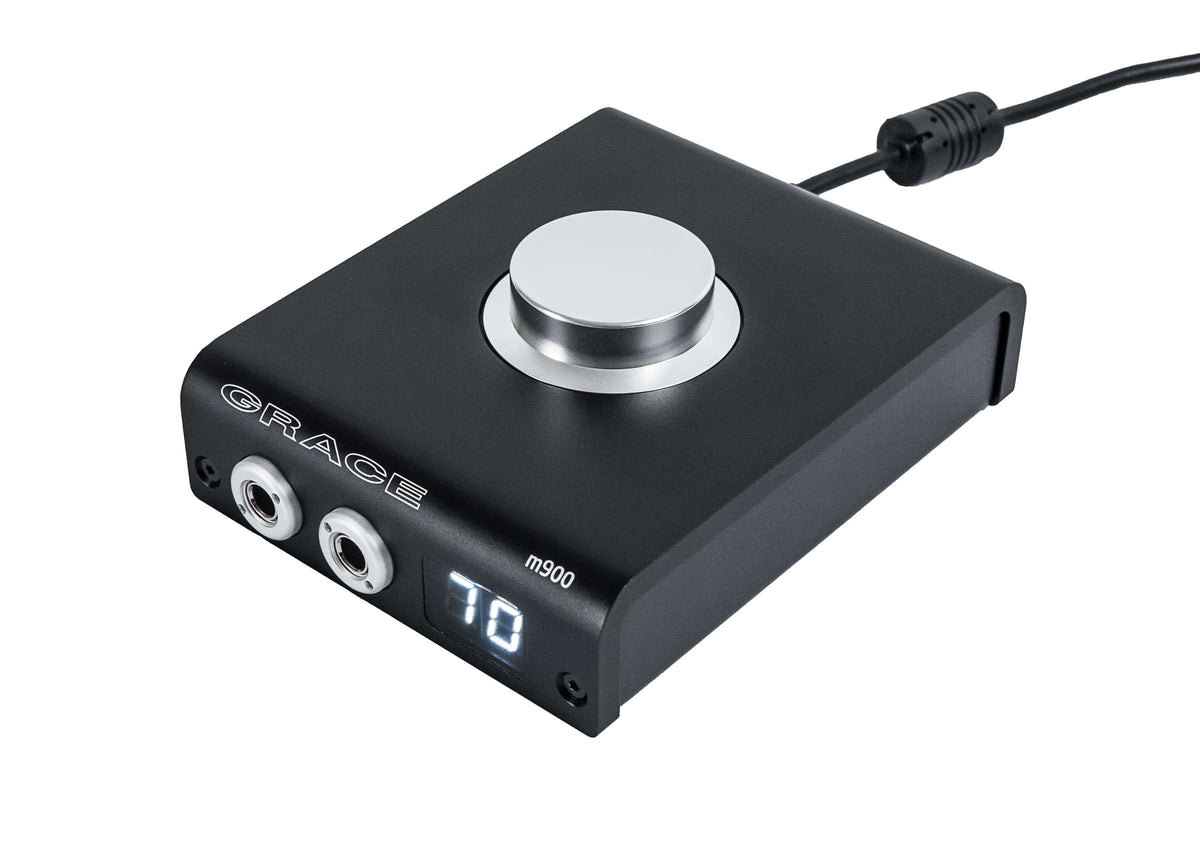
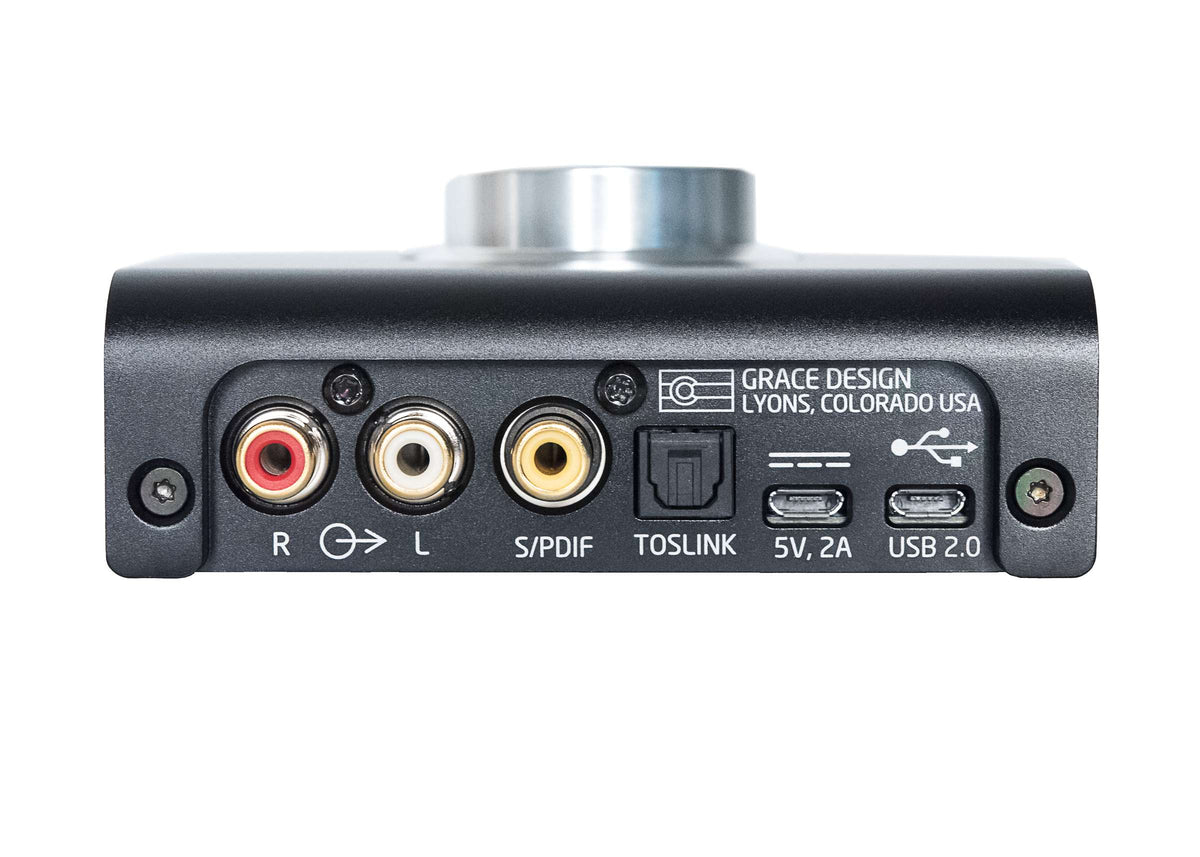


2-ch Headphone Amplifier with Stereo Unbalanced Analog Outputs, Digital Input via USB, TOSlink, and S/PDIF Coax, and Support for 44.1kHz to 384kHz PCM and 64X to 256X DSD Audio
Which one
The first question is whether you need anything at all. If your headphones are low impedance and reasonably sensitive, and they already play loud enough with headroom to spare from whatever you own, the answer is often no. Sensitivity and impedance are printed on every headphone's specification, and together they tell you more about what you need than any review will.
If you do need something, decide where it lives before you decide what it costs. A dongle is a converter and a small amplifier on the end of a cable, drawing its power from the phone or laptop, and it is the right answer for anything that has to travel. A desktop unit has its own power supply, which is where real current comes from, and it is the right answer for a chair you sit in every day. Buying a dongle for a desk, or a desktop box for a commute, is the common error in both directions.
Separates, balanced outputs and where to start
Then combined or separate. One box is cheaper, tidier and perfectly good. Two boxes let you change one half later without replacing the other, which matters if you expect to keep moving. It is a question about your next five years rather than about sound.
Balanced outputs, the four pin and 4.4 mm connectors, are worth having when the amplifier is built around them and worth nothing when it is not. A balanced cable into a socket that is single ended behind the panel changes nothing. Check what is behind the connector rather than the connector.
If you are buying one of the two first, buy the amplifier. The step from a built-in converter to a competent external one is real and modest. The step from an underpowered output to an adequate one is neither.
Worth knowing
Most converters made in the last decade are already better than the recording. The measurable differences between a competent one at $150 and an expensive one at ten times that are small, and in blind listening they are very hard to hear. The difference is better spent on the headphone.
Amplifiers are the opposite, and it helps to know why. An amplifier supplies current into a load that changes with frequency, and how well it does that is audible. Power ratings make this harder to see rather than easier, because the same amplifier quoted into 32 ohms and into 300 ohms produces two numbers that look nothing alike. Compare at the impedance of the headphone you own.
Noise, tubes and power supplies
Noise decides whether sensitive in-ears are usable at all. An amplifier built to drive 300 ohm headphones will often hiss audibly into a sensitive in-ear, and the more powerful it is the worse this tends to get. If you own both kinds of headphone, that is a real constraint on buying one box for everything, and it is the reason so many people end up with two.
What tube amplifiers mostly add is a small amount of even order distortion and an output impedance high enough to interact with the headphone, which shifts the frequency response in a way plenty of people enjoy. Enjoying it is a good reason to buy one. Being told it is more accurate is not.
The power supply is often not in the headline price, and at the cheaper end it is often where the corner was cut. Check what is actually in the box before you compare two numbers.
Worth reading
All guides
Impedance and sensitivity tell you whether a headphone needs an amplifier, and for most of the headphones on this site the answer is no: here is how to read the two numbers, and which ones actually...

Most people do not need one. Some need one and do not know it. How to work out which you are, before you spend anything on a box.

You already own a DAC. Here is what a better one actually changes, when it matters, and why the headphone and the amplifier come first.

Five picks for a desktop headphone amp or DAC around $150, including the one with a tube in it and the pair we would buy used.
We take amps and DACs on consignment and in trade. Tell us what you have.
What you get either way
The listening room
Third floor at 215 East Lewis Street in Livingston, by appointment. An hour in the room settles this faster than anything either of us could write.
How we grade
Used and consigned gear is graded at the worst axis and never averaged. Every defect is named on the listing and the standard is published, so as described is something you can hold us to.


